

How to Transition Your Skincare Routine for Autumn Weather
Share
Your skin knows autumn is coming before you do. That tight feeling after cleansing, the way your usual moisturizer seems to disappear within hours, the subtle dullness that creeps in despite your summer glow routine working perfectly just weeks ago.
This isn't your imagination. Your skin responds to environmental changes faster than your conscious mind registers them. Humidity drops, temperatures fluctuate, indoor heating kicks in, and your skin barrier faces an entirely different set of challenges than it did in July.
What Actually Changes in Your Skin During Autumn
Research shows that skin barrier function decreases significantly as relative humidity drops below 60%.¹ Autumn brings exactly this scenario. The stratum corneum (your skin's outermost protective layer) begins losing moisture more rapidly, and the natural lipid production that kept your skin balanced during warmer months starts to slow.
Your skin's natural exfoliation process also changes. Summer's increased cell turnover from sun exposure and higher temperatures gives way to a slower renewal cycle. Dead skin cells accumulate more readily, creating that dull appearance that no amount of summer skincare seems to fix.
Indoor heating compounds these changes. Forced air systems strip moisture from both the environment and your skin, creating a double challenge that your lightweight summer routine simply can't handle.
Reading Your Skin's Transition Signals
Touch your cheek right after cleansing. How long does that tight feeling last? If it's more than a few minutes, your skin is already signaling that it needs more barrier support.
Look at your skin in natural light. Summer's natural glow comes from increased oil production and faster cell turnover. As these processes slow, you might notice your complexion looking flatter or less vibrant.
Pay attention to how quickly your moisturizer absorbs. If your usual application disappears almost immediately, leaving you reaching for more product, your skin's moisture needs have already shifted.
Check your jawline and around your nose after spending time outdoors. These areas often show the first signs of environmental stress as temperatures drop and wind picks up.
The Gradual Transition Strategy
Sudden routine overhauls shock your skin. Instead, introduce changes gradually over 2-3 weeks. This allows your skin barrier to adapt without triggering sensitivity.
Start by swapping your lightweight summer mist for something more hydrating. Equinox provides the deeper hydration your skin needs as humidity drops, while the botanical extracts support barrier repair. Apply it to slightly damp skin for maximum absorption.
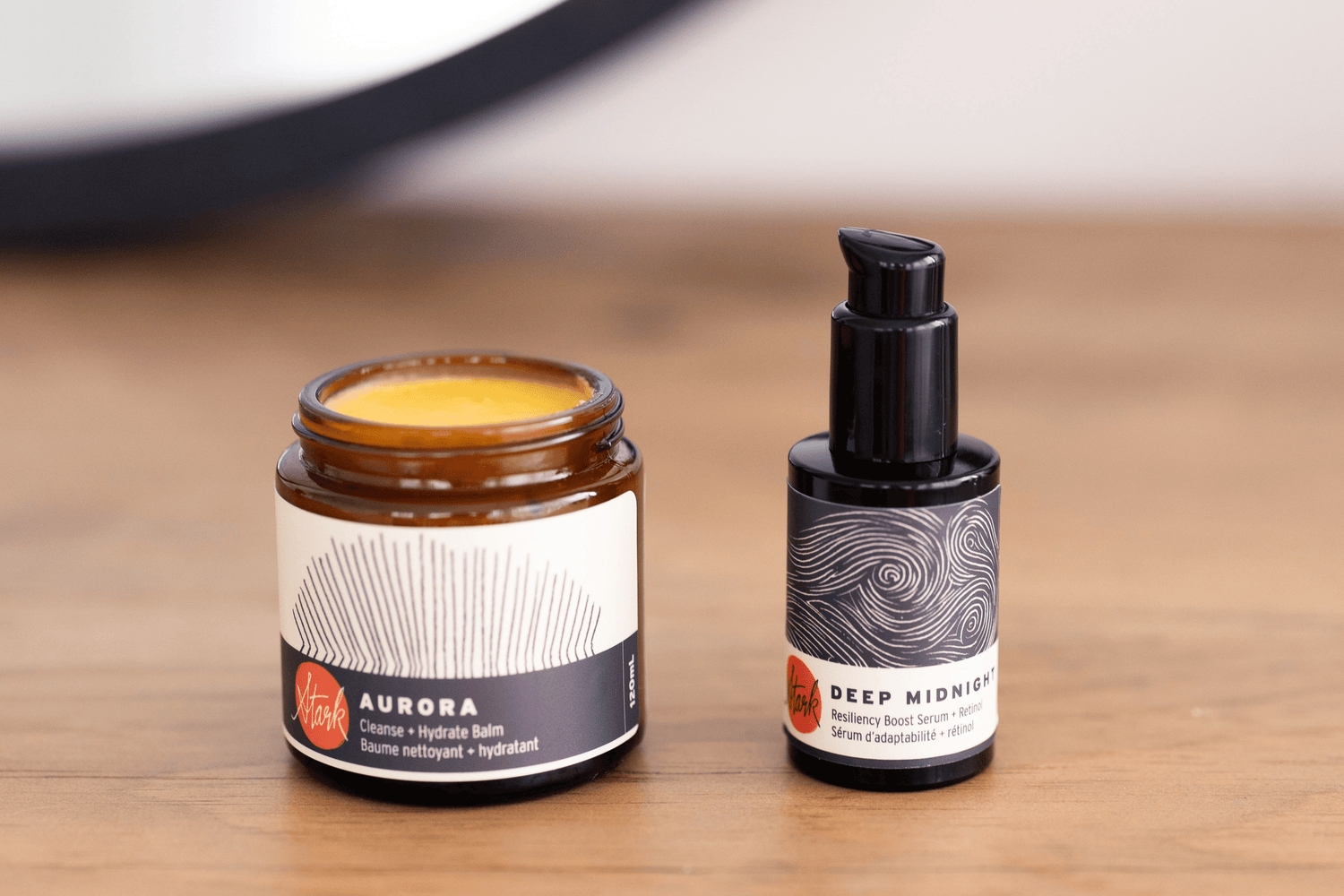
Next, assess your cleansing routine. If you've been using a single cleanser all summer, you might need to add a first cleanse step for the dryer months ahead. Aurora Cleansing Balm works perfectly as this first step, removing sunscreen and daily buildup without stripping your skin. Follow with Eclipse for a gentle second cleanse that supports cell turnover without irritation.
Your treatment oil needs might change too. City Light Daytime Oil remains excellent for morning use, but you might find yourself needing Midnight more frequently in the evening as your skin's repair needs increase.
Adapting Your Routine Timing
Autumn skincare isn't just about different products. The timing of your routine matters more as environmental conditions become less forgiving.
Apply your hydrating mist while your skin is still slightly damp from cleansing. This technique, called wet skin application, can increase hydration by up to 40%.² Don't wait for your skin to completely dry before moving to the next step.
Allow more time between your mist and oil application. Your skin processes hydration differently in drier conditions, and rushing the steps can actually reduce effectiveness.
Consider splitting your oil application. Instead of applying your full amount at once, try half your usual dose, let it absorb for a few minutes, then apply the remainder. This technique works particularly well with Midnight during the transition period.
Supporting Your Skin's Natural Adaptation
Your skin has remarkable adaptive capabilities, but it needs the right support during seasonal transitions. The key lies in working with these natural processes rather than overwhelming them with dramatic changes.
Focus on barrier support rather than active treatments during the first few weeks of transition. Your skin is already working to adjust its natural functions, and adding aggressive actives can interfere with this adaptation process.
Petrichor provides excellent antioxidant support for skin dealing with environmental stress. The blend of botanical extracts helps neutralize free radicals generated by temperature fluctuations and indoor heating exposure.
Pay attention to your skin's response and adjust accordingly. Some days your skin might need extra hydration, while others require lighter application. This flexibility prevents the sensitization that comes from rigid routines during periods of environmental change.
Common Transition Mistakes to Avoid
Adding multiple new products simultaneously overwhelms your skin during an already stressful adaptation period. Introduce one change at a time, allowing your skin to adjust before making additional modifications.
Over-exfoliating during seasonal transitions damages your barrier when it's already under stress. Your skin's natural exfoliation process slows during cooler months for good reason. Respect this natural rhythm rather than fighting it with aggressive treatments.
Assuming you need "stronger" products just because your skin feels drier. Often, your skin needs more hydration and barrier support, not more active ingredients. Aurora can be left on as a treatment mask when your skin needs extra nourishment, providing both cleansing and therapeutic benefits.
Neglecting the gradual approach in favor of immediate results. Your skin's adaptation process takes time, and pushing for faster changes often results in irritation and setbacks that ultimately delay the transition.
Building Resilience for the Season Ahead
Successful autumn skincare transition creates resilience for the months ahead. Your skin adapts more readily to winter's harsher conditions when the transition has been gradual and supportive.
Monitor how your skin responds to temperature changes. This awareness helps you make real-time adjustments as conditions continue to shift throughout the season.
Your autumn routine becomes the foundation for winter skincare. The products and techniques that work during this transition period provide valuable information about your skin's cold-weather needs.
The goal isn't to fight seasonal changes but to support your skin through them. Your skin knows how to adapt; your routine should simply provide the tools it needs to do so effectively.
Citations:
- Proksch, E., et al. "Skin barrier function, epidermal proliferation and differentiation in eczema." Journal of Dermatological Science 43.3 (2006): 159-169.
- Lodén, M. "Effect of moisturizers on epidermal barrier function." Clinics in Dermatology 30.3 (2012): 286-296.


